How Easy Was It to Be Accused of Witchcraft in Scotland?
Apparently, it takes very little to prove I’m a witch.
At least that’s what I discovered on recent trip to Scotland.
As part of my research for the next book in the Tales of the Witchborn series, I went with my daughter on The Cadies and Witchery Tour in Edinburgh. The guide demonstrated just how easily suspicion of witchcraft could turn into an accusation with dire consequences.
He asked for a volunteer and naturally I stepped up.
“Who here thinks Lisa the Witch is a witch?”
Four hands, including my own daughter’s (!?!) went up quickly.
That, he explained, was enough to get me into some serious trouble under Scottish law. And things went rapidly downhill from there.
When Neighbors Thought You Were a Witch
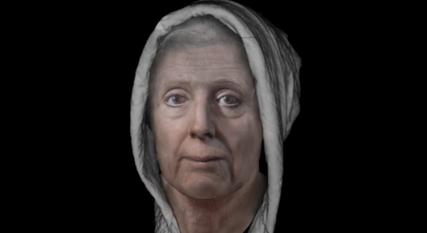
People have always looked for answers when bad things happen – and often they look for someone to blame. According to research from University of Edinburgh’s Survey of Scottish Witchcraft, approximately 84% of those accused of witchcraft were women. They tended to be older and known as “troublesome women.”
Movies sometimes make us think that witches were rounded up by angry mobs with pitch forks (think: Monty Python and the Holy Grail). But people in early modern Scotland genuinely believed in the existence of witches. Witchcraft was a crime punishable by death, so the gathering of evidence was taken seriously.
Unfortunately for the accused, DNA tests, finger prints and or modern standards of proof hadn’t been invented yet.
Did a blacksmith dream you visited their bedroom at night? Did a farmer have an argument with you and then his crop failed the next day? Maybe his wife saw your black cat nearby and then got sick? Maybe you bewitched her then shape-shifted into the cat to escape!
To us, these sound absurd. But to people who believed witches could cause harm, they found this evidence quite persuasive.
If you were already unliked, it was easy for accusations to snowball, and the preachers in charge of the church courts (called the Kirk Session) believed they were doing God’s work to eliminate the witches and protect their villages.
Whatever You Do, Don’t Call Yourself a Witch
Remember when he asked, “Who here thinks Lisa the Witch is a witch?”
Well, I’d already fallen for his trap. I accepted his nickname Lisa the Witch.
As our guide explained, even the way a person responded to an accusation could draw more suspicion. Imagine being confronted in a marketplace and someone called you a witch. If you didn’t emphatically say, “I’m not a witch,” or perhaps said something snarky like, “keep talking and I’ll curse you!” – your words could come back to haunt you.
Watch Me Get Accused of Witchcraft
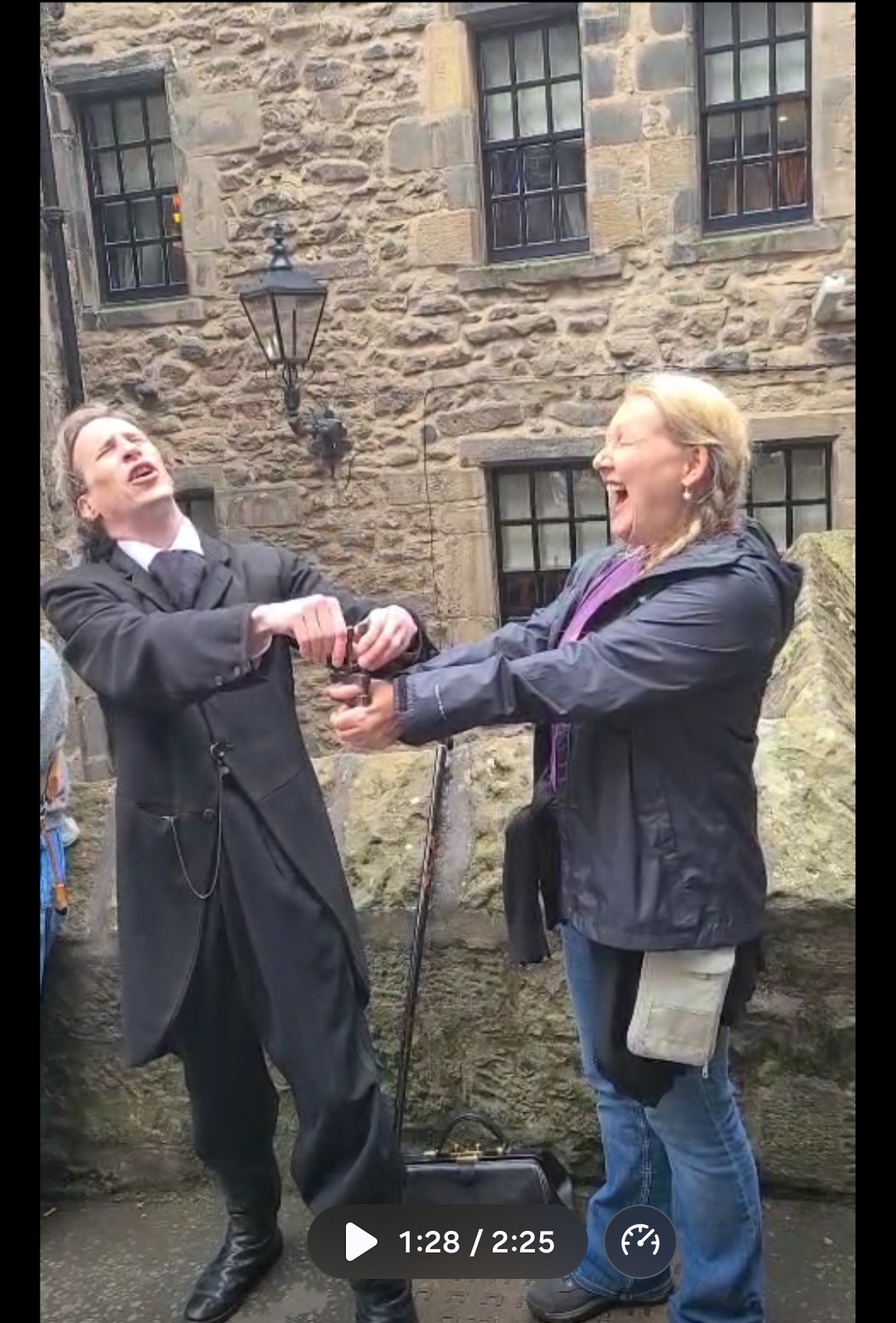
By this point, my prospects weren’t looking good. According to my accuser I already had strong evidence against me so the only thing left was to get a confession.
That’s when he brought out the periwinks.
I’ll let you see what happened next.
View this post on Instagram
What Were Periwinks (among other things…)
Across Scotland and the colonies, “rough interrogation” methods – what we would consider torture – were often used. Periwinks were thumbscrews that could be used not only on thumbs, but other fingers and toes.
Another gruesome devise was the scold’s bridle, or brank: An iron frame fitted over a person’s head with a metal bit held over the tongue, only this bit had a sharp spike that would split your tongue in half if you tried to talk. They would be a leash attached to the brank and parade the woman through town for public humiliation.
The most common form of torture, which the government didn’t think was torture at all, was sleep deprivation. Whenever the accused would fall asleep, a guard would force her to walk up and down the cell where she was kept, all while the witch hunter would question her about her dealings with the devil and who else had joined the coven. Sometimes a long double forked spike called the Witches Bridle would be placed beneath her chin and chest, stabbing her anytime she fell asleep.
Why Did This Matter?
Did you know that sleep deprivation can cause confusion, distorted thinking and even hallucinations? This explains why so many people confessed to crazy things like flying on broomsticks or making love to a half man-half goat. Also, if you are in enough pain you’d likely confess to anything to make the pain stop. Once another witch was named, the accusations could spread.
Needless to say, I confessed.
Faced with the dreaded periwinks, Lisa the Witch found it remarkably easy to admin to just about anything. It was funny when I was standing with a group of tourists 400 years later, but for the women and men caught up in accusations witchcraft and coerced confessions, it was anything but entertainment.
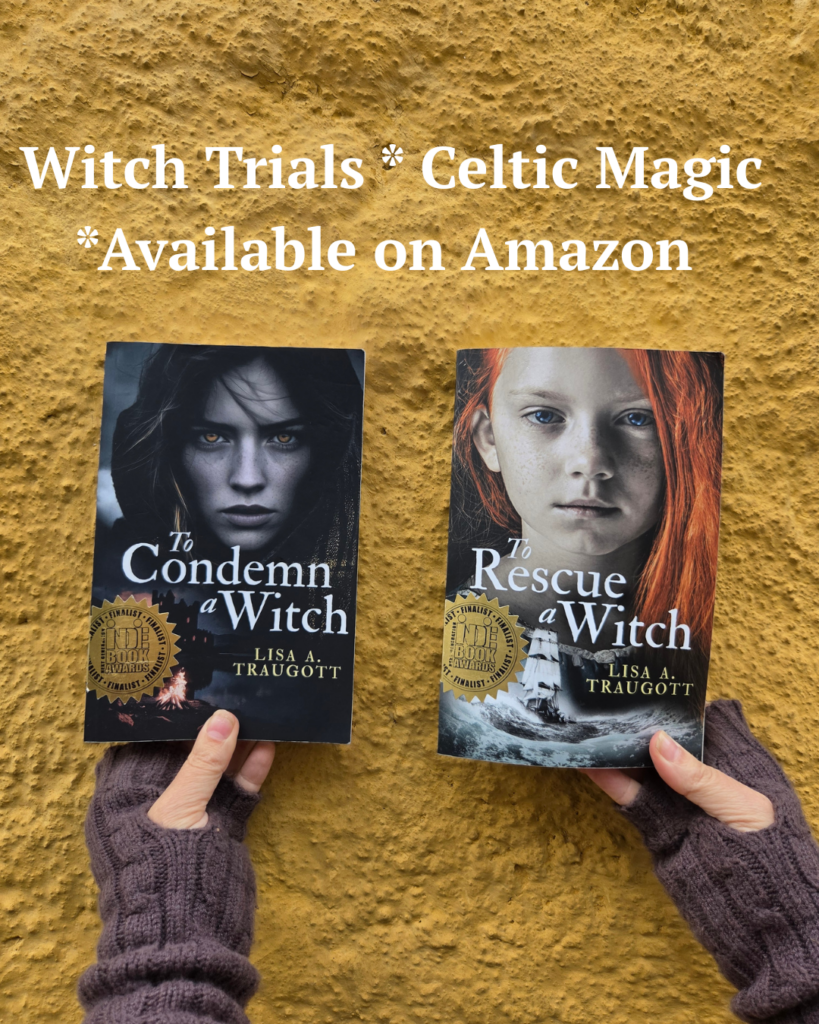
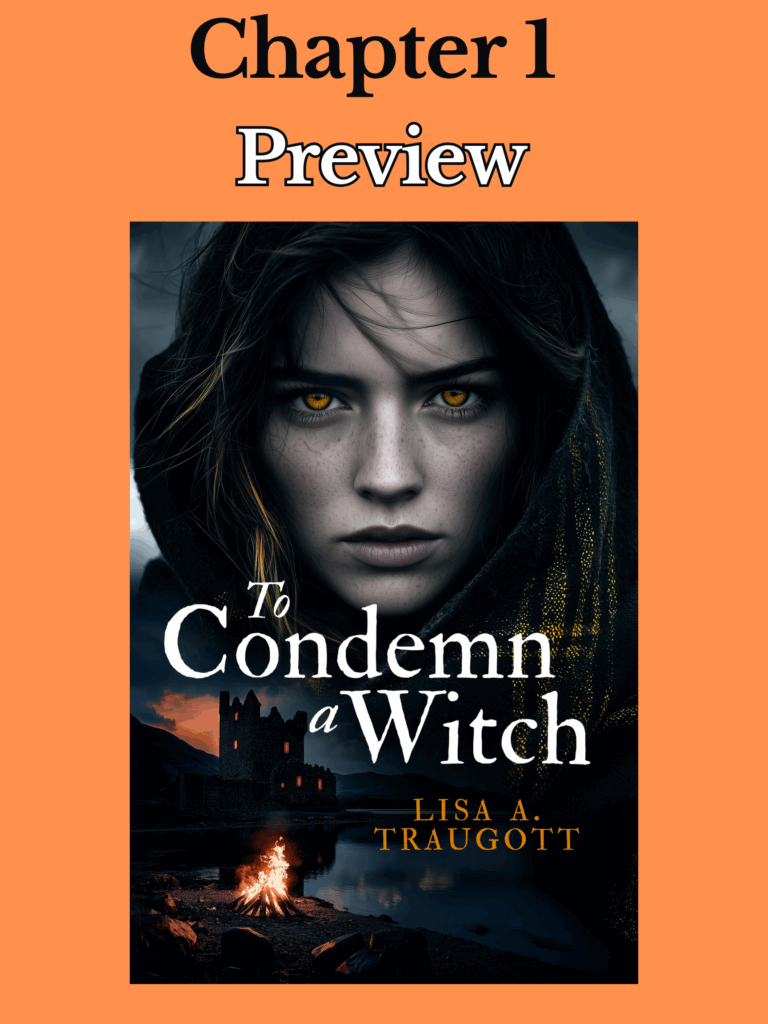
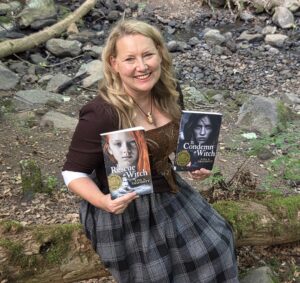
That’s something I try to bring to life in my Tales of the Witchborn series. In both To Condemn a Witch and To Rescue a Witch, accusations weren’t abstract threats – they were life or death crucibles to face.
Standing there in Scotland as four people accused me of witchcraft really brought this home to me.
Now, I do have a piece of advice if you find yourself transported through time to a Scottish witch hunt. If someone calls you a witch, don’t agree with them!
Lisa 😉
P.S. – If you like dark historical fantasy, witch trials, Celtic magic, and found family, I invite you to escape into Tales of the Witchborn.