Kris Draven on The Liberty Algorithm, AI, Freedom, and Fighting Oppression
When Kris Draven told me his new novel imagined a near-future America where a president suspends social media and AI and begins consolidating power, I knew we were going to have an interesting conversation.
But what makes The Liberty Algorithm particularly fascinating is where some of that fictional darkness came from.
Kris grew up under communist rule in Poland. His father was arrested for editing an anti-communist newspaper, and Kris still remembers government agents arriving at his family’s home. Even more incredible, the opening of his new dystopian techno-thriller draws partly from those childhood experiences.
That’s quite a departure from Kris’s first novel, Anna’s Medallion, which explored slave labor in Nazi Germany and was inspired by his grandparents. But as you’ll discover in our conversation, his books aren’t as different as they initially appear. Whether he’s writing historical fiction, dystopian thrillers, or science fiction, one theme keeps finding its way onto the page: ordinary people fighting for their freedom.
This time, Kris combines that theme with artificial intelligence, political upheaval, action, suspense, unexpected twists, and even a little romance.
So could technology threaten our freedom—or might it ultimately help protect it?
Let’s ask Kris.
Fighting for Freedom: A Q&A with The Liberty Algorithm Author Kris Draven
Your first novel, Anna’s Medallion, explored the very real and painful history of slave labor in Nazi Germany. The Liberty Algorithm jumps into a near-future America shaped by AI, social media, and authoritarianism. What inspired such a dramatic change in direction?
In general, I love to explore different genres and continue to find myself as a writer. While Anna’s Medallion was a dedication to my grandparents, I now focus on topics that interest me personally. The Liberty Algorithm extrapolates our current political situation and tries to predict what our future might hold, which I found very interesting to explore. My future novels might explore different stories and genres altogether.
You grew up under a communist regime in Poland and drew on those experiences while creating the atmosphere of The Liberty Algorithm. Are there specific memories or feelings from your childhood that found their way into the fictional world of the novel?
Yes, definitely. My father was arrested by the communist regime for being an editor of an anti-communist newspaper, and the darkness of that period definitely set the tone for The Liberty Algorithm. The very first scene draws from the time when two agents of the Polish version of the KGB showed up at our house to tell us that my father was arrested and would be in jail for at least 10 years if we didn’t tell them where he hid his car. This was only a day after my grandfather and I collected anti-government newsletters from the trunk of that car and burned them in a coal-fired furnace.
The premise feels especially timely: a U.S. president suspends social media and AI and begins consolidating power. Without giving away spoilers, what questions about freedom, technology, and government did you want readers to wrestle with?
Having grown up in a communist country that won its freedom, I always found it fascinating how easy it is to change the government. All you need is one person to organize enough people to flip the script. I wanted the readers to think about how easily the US could fall into a dictatorship, but also how easily we could prevent it. All you need is one person, which could be any one of us.
AI can be portrayed as either humanity’s salvation or its downfall. Where does The Liberty Algorithm fall on that spectrum—and did writing the book change your own feelings about artificial intelligence?
I’m an optimist by character, and I personally don’t believe in all the doom-and-gloom scenarios of AI’s future. If you look back in history, technology has improved our lives in almost every case. There might be a painful transition, but ultimately humanity always ends up better off than before. Just think of the improvements that cars, planes, the internet, smartphones, etc. brought to our daily lives. The book proposes that AI could, in fact, be our salvation from our political problems, and I think this could very easily be the case. There is just so much corruption and inefficiency in how the government is run.
After writing the emotionally heavy Anna’s Medallion, you said you wanted your next books to be more fun. What was it like to give yourself permission to write action, adventure, twists, and even a little romance this time around?
It felt great, actually. The research and writing of Anna’s Medallion took a heavy toll on my soul. The oppression and murder by the Nazis were even more horrific than most people know. I really needed to get out of that world, and writing a thriller action-adventure story was a lot of fun. In fact, I actually wrote a sci-fi fantasy first, called Empire of the Moon, which will be coming out around October. I wrote The Liberty Algorithm while taking a break from that. Both were fun to write.
You describe The Liberty Algorithm as “not what you think,” despite a premise that may remind readers of current events. What do you hope surprises readers most about where the story ultimately goes?
I want to keep that a surprise, but be assured that there are a lot of unexpected twists and turns. My goal is to have each chapter start and end with some suspense so that the reader is never bored.
Your first two novels couldn’t look much more different on the surface—one examines Nazi-era forced labor and the other imagines a technologically controlled America. But underneath, do you see a common thread connecting the two stories?
This is a great question and one that I actually asked myself in recent months, considering all the genre-jumping I’ve been doing. And in fact, there is one common thread: all of my novels have freedom fighting as their theme. Anna’s Medallion was about two slaves in Nazi Germany fighting for their freedom against a brutal regime. The Liberty Algorithm is about two people fighting an oppressive regime in the dystopian United States. Empire of theMoon is about two people fighting an oppressive emperor. And the same goes for the historical thriller set in the Soviet Union that I’m currently writing, From the Ashes, which will be published in the first half of next year. So, my upbringing seems to have had a lasting effect on my writing.
One Theme Keeps Coming Back
After reading Kris’s answers, I was struck by his response to that final question.
On the surface, his books couldn’t be more different. Yet Kris discovered that he keeps returning to the same fundamental idea: What happens when ordinary people decide they will no longer accept oppression?
Considering his childhood in communist Poland, perhaps it’s not surprising that freedom keeps finding its way into his fiction.
I also appreciate that The Liberty Algorithm isn’t simply another cautionary tale about terrifying technology. Kris takes a decidedly more optimistic view of AI and humanity’s ability to adapt, which adds an interesting twist to a premise that might initially sound rather dark.
If you enjoy fast-paced thrillers, near-future “what if?” scenarios, unexpected twists, and stories about people standing up for their freedom, check out The Liberty Algorithm.
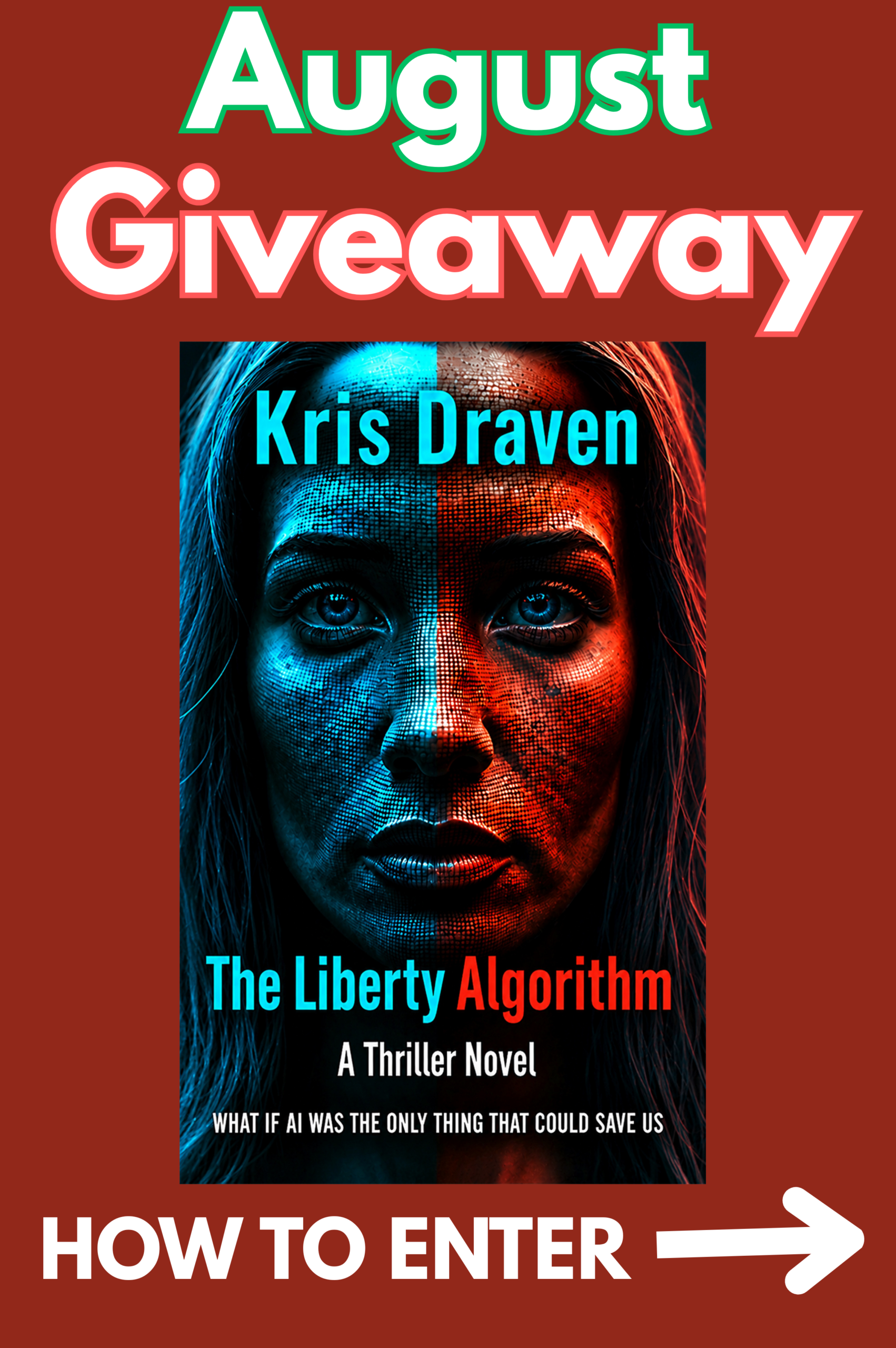
And don’t forget the giveaway! One lucky Wise One will win an ebook of The Liberty Algorithm.
To enter, simply sign up for my newsletter then reply “giveaway” to this month’s Wise Ones Newsletter by August 31. I’ll announce the winner in next month’s newsletter.
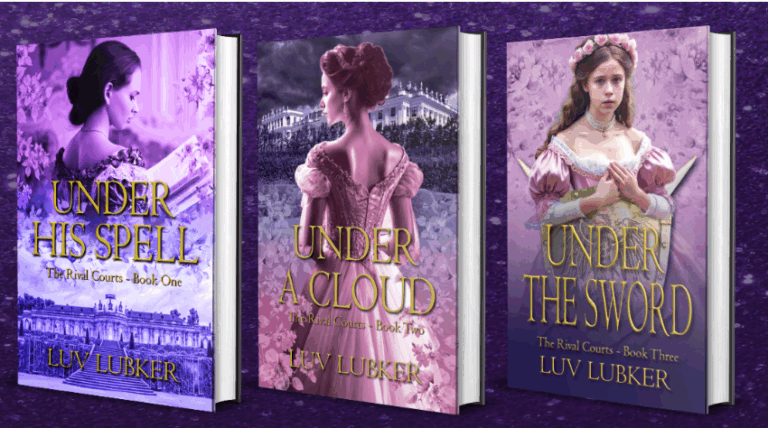
This month’s historical fiction giveaway features a royal tale of love, war, and secrets buried in the palaces of Victorian Europe. Meet Luv Lubker, indie author of The Rival Courts saga, a meticulously researched series that follows Queen Victoria’s daughter and her marriage to the future German Emperor. From forbidden love to political betrayal, her…
In honor of autumn, I went a little creative and asked a local artisan to provide this month’s giveaway, a handcrafted kitchen witch. A kitchen witch is a whimsical, protective doll traditionally kept in kitchens to bring good luck and guard the home. Rooted in European folklore, she was believed to prevent cooking mishaps, sour…
This October, I had the pleasure of chatting with Kevin Clark, a man who walks the line between craft and the supernatural. By day, he’s an artisan who handcrafts beautiful brooms inspired by ancient pagan traditions. By night, he leads ghost tours through the haunted streets of Kerrville, Texas, sharing eerie tales of local spirits…
This month, I’m thrilled to introduce you to Ann Kimbrough, author of the brand-new historical mystery The Harvey Girl: Fool’s Treasure. Set in 1891, the story follows New York socialite Willa Abbot, who trades ballrooms for train stations as she becomes a Harvey Girl—one of the legendary women who helped civilize the Wild West. With…
Because I’m so very grateful to have such great readers like you, I’m partnering with KJ Waters, author of the Stealing Time series, to participate in her holiday book haul! See instructions below for your chance to win awesome prizes. Limited time! This ends on November 25, 2025. Save Save KJ’s Holiday Book Haul…
This month, I’m excited to introduce you to Maranda and Chris, the creative duo behind Midnight Cauldron Shop, a small candle company that blends craftsmanship, imagination, and seasonal comfort into every pour. We met at one of the market places earlier this fall. Their candles smelled so good, I had to share them with the…