History often remembers kings, queens, and famous battles—but what about the women whose stories were never written down?
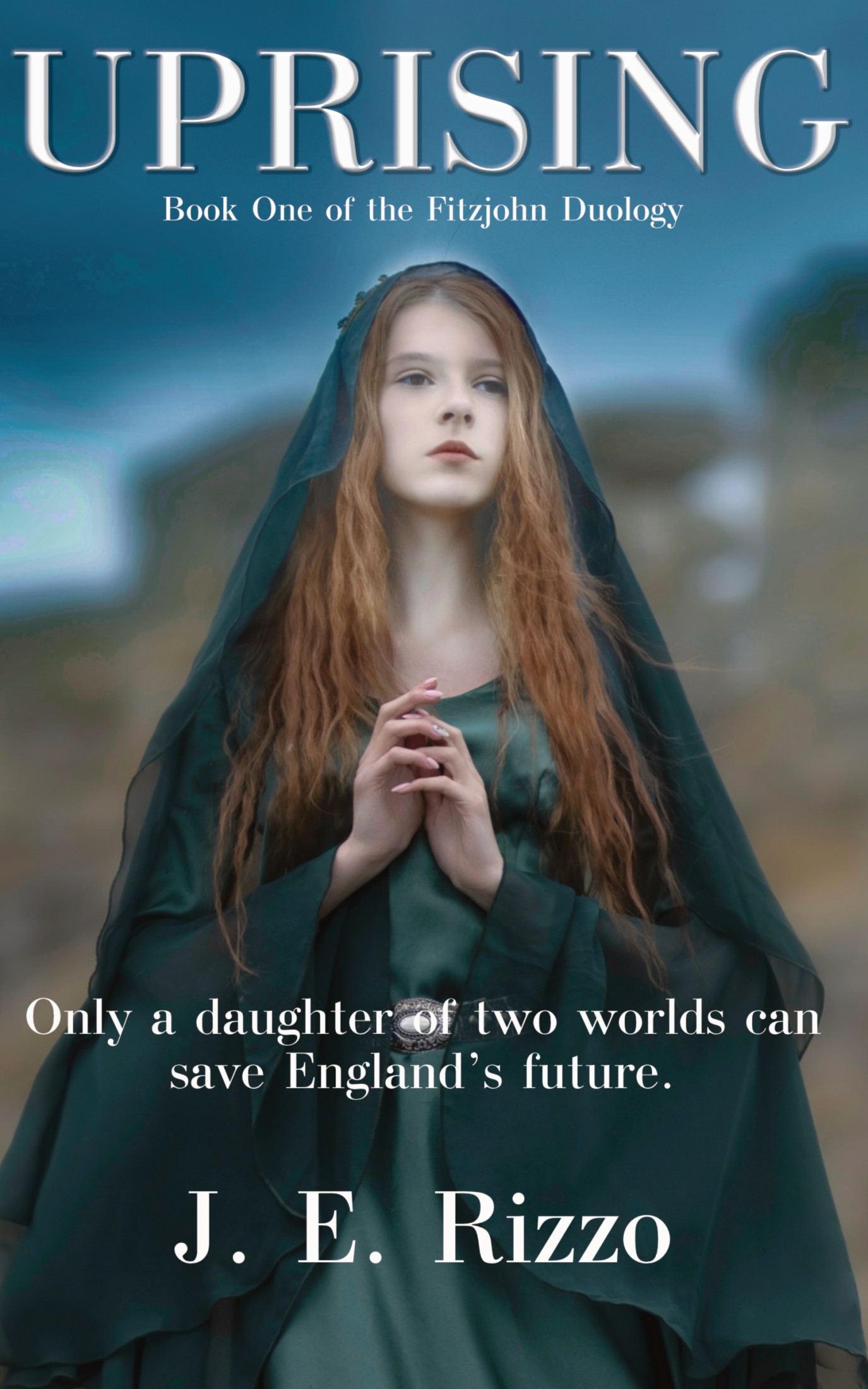
That question lies at the heart of Uprising, Jennifer Rizzo’s captivating debut novel. Set during the Peasants’ Revolt of 1381, the story follows Blanche Fitzjohn, a healer with second sight whose intelligence, resilience, and quiet determination place her at the center of one of England’s greatest historical mysteries.
I met Jennifer through a writers’ group called The History Quill while she was writing Uprising and I was writing To Condemn a Witch. Every month I looked forward to reading the next chapter in her story, and man does her debut novel deliver! (Yes, I read the whole book already.)
Inspired by real historical figures and meticulous research, Jennifer challenges many of our assumptions about medieval women, neurodivergence, grief, and even magic. In our conversation, we discuss the fascinating history behind the novel, why Blanche refuses to fit the traditional medieval mold, and how forgotten women may have influenced history far more than we’ve been led to believe.
If you enjoy immersive historical fiction featuring courageous women and just a whisper of the mystical, I think you’ll love meeting Jennifer—and Blanche. And I’m thrilled that this month’s giveaway is a signed copy of her debut novel, Uprising. This giveaway is open to residents in North America and Europe. For all the details about how to enter to win, scroll to the bottom. (Hint: sign up for my newsletter and reply ‘giveaway’ in the email.)
The Woman Behind Uprising – A Q&A with Jennifer Rizzo
1. Uprising is set during the Peasants’ Revolt of 1381—an event many readers have heard of but don’t fully understand. What first drew you to this moment in history?
I first read about the Peasants’ Revolt in one of my favorite books: Katherine by Anya Seton. The book is expansive and covers Katherine Swynford’s entire adult life, but this section stood out the most to me, and I found myself wanting to know more about this historical event.
2. Blanche Fitzjohn is a healer with second sight, neurodivergent traits, and a complicated family connection to the crown. How did her character come together for you, and what made her the right lens for this story?
As the mom of an autistic child and a medieval history enthusiast, I’ve always wondered what life might have been like for a neurodivergent individual in that time period. Most people assume it would have been awful. It’s an understandable conclusion. But I wondered, what if such an individual’s exceptional gifts helped them survive, to change their life in a positive way and that of history itself? That’s how Blanche’s character started, as a combination of my children: my son, who is autistic and my daughter who has ADHD and epilepsy. But I focused my research on neurodivergent adult females, and I began to realize how my own neurodivergence has shaped my life. Although my sensory sensitivities are not to Blanche’s sometimes superhuman level, they’ve caused struggles my entire life. In particular, I have highly sensitive hearing and become easily overwhelmed by combinations of sounds, and by repetitive sounds. I spent a majority of my life thinking there was something wrong with me. That I was a bad person because these things pushed me over the edge so much easier than others. But the process of writing Blanche helped me realize that no, I’m not bad. I just feel the world differently than some others. Since writing this book I’ve been able to develop more coping mechanisms, so I can function better.
Lastly, Blanche’s proclivity to growing is another a piece of me that found its way into her character. I have an inappropriately large collection of houseplants, which my husband jokingly loathes. I derive supreme pleasure from watching them thrive under my care, and often talk to them, pretending I can hear their responses. I enjoyed writing this fantasy into Blanche.
3. Historians still debate how the rebels managed to enter the Tower of London. What excited you most about exploring this historical mystery through fiction?
I’m fascinated by Henry of Bolingbroke’s survival that day. Historians widely accept that the rebels wanted to execute him, but how he actually came out unscathed is debated. Some say he hid in a cabinet, while others insist he was spared because of his youth. We do know that years later, after he became king, he pardoned a man named John Ferrour, who had been involved in another rebellion. The reason, notated in the royal accounts, was that this man had spared the young Henry’s life during the Peasants’ Rebellion of 1381. I wanted to further explore the mechanics of how this unfolded. No historical records note Blanche Fitzjohn on that day, but it’s safe to assume she was at the Tower. She was the Constable’s wife, and had nowhere else to go. Therefore, she was Henry’s only family member present. To me, it seemed highly possible that she played a part in his survival.
4. Your novel has been described as flipping the script on traditional Middle Ages narratives. What are some common myths or assumptions about the period that you wanted to challenge?
The goal of all my writing is to shine a spotlight on women who have been overlooked. When researching for Fitzjohn, I came upon a fourteenth century monastic manuscript, detailing the role of women in their society. They were meant to be subservient: to help their men and bear and raise children, the text read. They lived in the background, not creating history but bending to its will. In the manuscript’s margins, however, written in ink scientists have tested and determined to be from the contemporary time period, over six hundred years old, someone’s scrawled “Not Always.” This proves that not everyone bought into what the clergy and nobility were selling, as far as women’s roles. There were women who pushed the limits, who stood out and against their husbands, who shaped their own lives and history.
Also, I’ve always been keen to explore medieval thoughts on death and loss. In many books and movies depicting that time, when a character loses a loved one, it’s glossed over, as we all know death was an omnipresent part of medieval life. This is true. However, I reject the idea that people didn’t mourn the dead, that they didn’t feel the same sense of loss we experience today. In the middle ages, people wouldn’t have been as shocked by death as they are today. Today, if someone loses a child or a younger person dies, it’s jolting. In Blanche’s time, no one was stunned by death, but they still mourned like you and I today. When writing the story, my own father died, and that’s when I started to see these themes coming out in the story, particularly Eldridge’s death, and how Blanche deals with it.
5. Blanche’s arranged marriage is deeply unhappy and abusive. How did you approach writing her internal strength and survival without romanticizing her suffering?
This is difficult and many novels get it wrong. It’s important that we include these themes, because they were, and unfortunately are, a part of many women’s experiences. However, writers can’t dwell on them, can’t revel in them. I’m an avid reader in the historical fiction space, and have come upon many novels that treat violence against women almost like a fetish. Honestly, I find the writers are usually men. I think a key part of making sure violence isn’t sadistic is for the novelist to be an individual who knows what it’s actually like to be a woman. Although men can and should write in the genre, they must employee sensitivity readers–women–to make sure they’re not overly-sexualizing violent scenes. It’s imporant that the woman is given agency in her situation. Many male writers don’t understand this, because a woman’s agency during a violent encouter often comes from within. It’s a mental struggle she overcomes, as opposed to a physical one. In more traditional historical fiction novels that over-use violence against women, it’s usually told from the male perspective, and focuses on the physical action and sexual pleasure. By flipping the POV to the female, and giving her control over her emotional state, she’s given agency. Again, I first read a scene like this in Anya Seton’s Katherine. On Katherine Swynford’s wedding night, she has her first sexual experience, which is unenjoyable and painful. Then, though, the character experiences an emotional epiphany, during which she establishes the personal strength and fortitude that will carry her through the rest of her story. Seton gave Katherine the agency to take this negative experience and build her character in a positive way.
6. There’s a subtle thread of magic and second sight woven into the story. How did you decide where to draw the line between historical realism and the mystical?
This was a surprise development. In the novel’s first draft, when writing what is now chapter sixteen, I began to weave it into Blanche’s perception of the marching rebels, and how she controlled the wind. As the relationship between Blanche and Eldridge developed, Eldridge became a more major character, and that served as a propelling force for developing Blanche’s magic.
7. Several early readers have compared your voice to Maggie O’Farrell and Philippa Gregory. Which authors or books most influenced your writing of Uprising?
As I mentioned, I’ve been an avid historical fiction reader for many years, and have been influenced by a lot of wonderful authors. O’Farrell’s Hamnet and The Marriage Portrait were influential, as well as all of Gregory’s works, but especially The Lady of the Rivers and The White Queen. As noted above, Anya Seton’s Katherine is also a favorite.
8. This is your debut novel—congratulations! What surprised you most about the journey from research to finished book?
Thanks! The process has been eye opening. I was particularly moved by how the book’s characters took on a life of their own, and shaped the book in ways I never predicted. For example, Joan became a major character, but wasn’t even in the original outline. In an early chapter, I realized Blanche should have a maid, so I tossed in a line about how Lady Swynford hired someone. But then, it was like little Joan raised her hand and said, “Hi. Sorry, but I have a lot more to say.” Now, she’s a pivotal character, and I can’t imagine the book without her.
9. For readers who love strong, unconventional women in historical fiction, what can they expect to feel when they turn the final page of Uprising?
I know some readers may feel like Blanche doesn’t fit in, that she doesn’t feel “medieval.” Early in the publishing process, a beta reader commented that the only character who felt “medieval” was Eldridge. When he said this, I knew I was onto something. That’s what I wanted. The bottom line is that we weren’t there in the middle ages. Our only concept of what women were really like is drawn from the writings of men, mostly monks. So many people want to see medieval women fitting into only a few archetypes: the mother, the damsel, the crone. I reject that idea, and believe that in reality, there were all different types of women, just like today. Women like Blanche may have been less common, but were certainly there.
J.E. Rizzo is a life-long history fanatic and writer of historical fiction, and her work can be found in Vanity Fair, The Boston Globe, The Guardian, and Ultrarunning Magazine, among others. Her debut historical fiction novel is forthcoming with Literary Wanderlust, and she also won Manuscript Academy’s Agent Choice Award in 2024 and History Inquiry’s 2022 Medieval History Writing Challenge. When not writing, she can be found running ultramarathons through the forests and mountains of New England or spending time with her two children, husband, rescue dog, and semi-feral ginger cat.
Thank you!
A heartfelt thank-you to Jennifer for sharing both her research and the passion behind Uprising.
One of my favorite takeaways from our conversation is Jennifer’s reminder that history isn’t just shaped by the people whose names appear in textbooks. Countless ordinary—and extraordinary—women lived remarkable lives that were simply never recorded. Historical fiction gives us the opportunity to imagine those forgotten voices while remaining grounded in the evidence history leaves behind.
If you’re drawn to richly researched historical fiction, resilient heroines, and stories that challenge the way we see the past, Uprising deserves a place on your reading list.
Better yet, one lucky Wise One will win a signed copy this month!
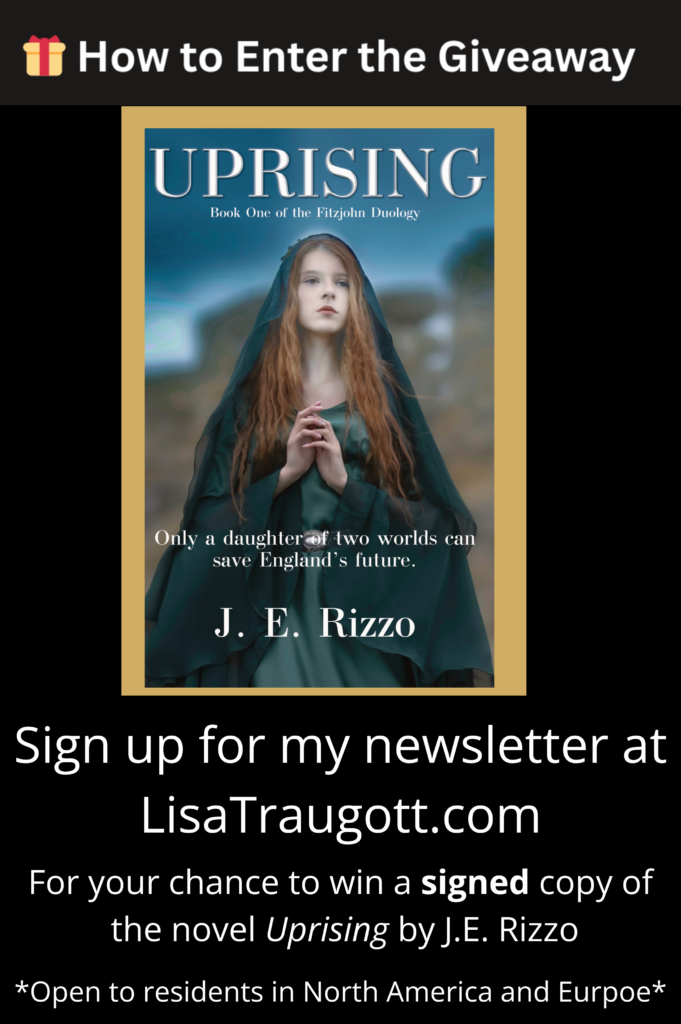
To enter, simply sign up for my newsletter at LisaTraugott.com and reply to this month’s newsletter with the word “giveaway.”
Good luck—and may your next favorite historical heroine be one history almost forgot.
Talk to you soon, Wise Ones!
Lisa 😉
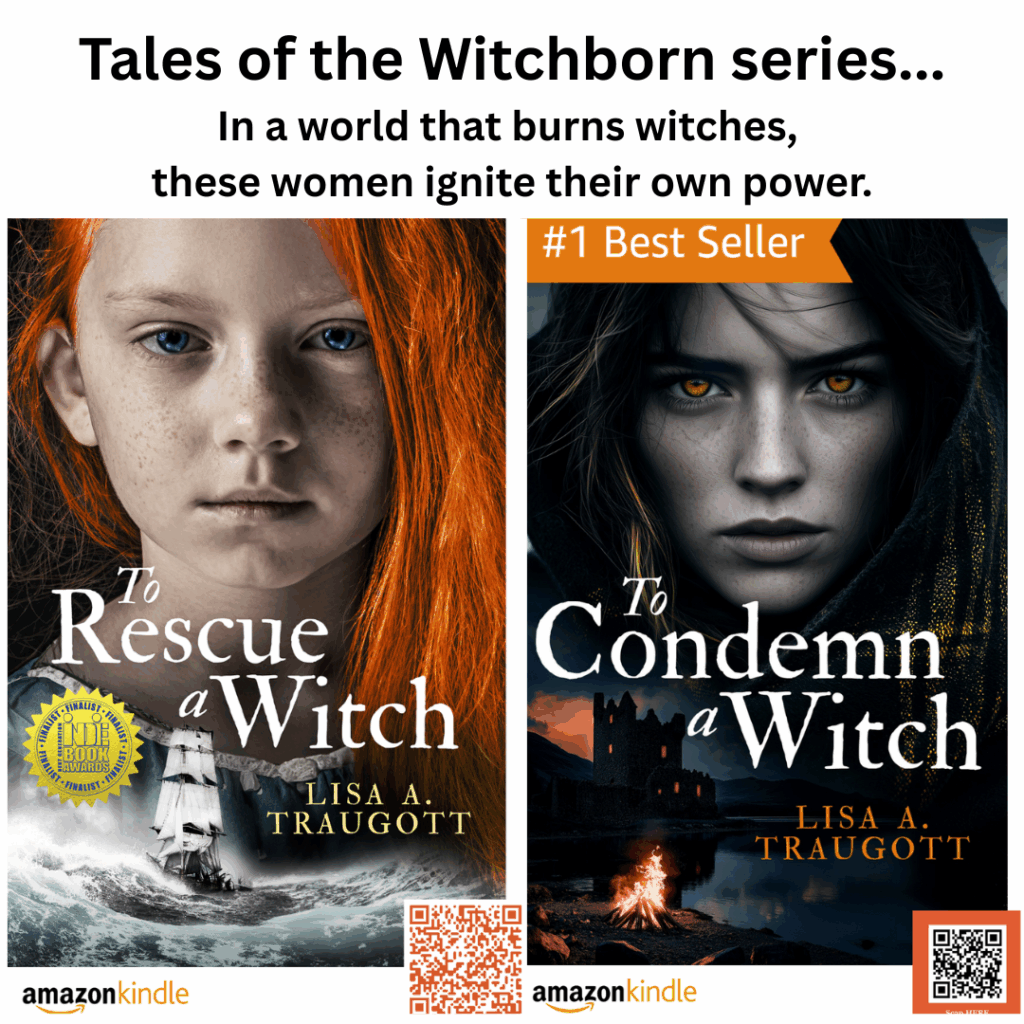
P.S. – These are my historical fantasy books: To Rescue a Witch and To Condemn a Witch. I’m currently recording the audiobooks! More news on that in future posts.
Novel Update #2 It’s been called lots of different things. “Sagging Middle Problem.” “Marathon of the Middle.” “The Middle of the Book Sucks Syndrome.” I’m there, people. For non-writers: When you are writing a book usually the opening is really strong, the climax is the stuff Netflix dreams are made of, but that big section…
Hey readers! It’s been a pretty eventfully month on my novel writing journey. Remember how I told you I submitted my manuscript to The History Quill‘s beta reader program? (A beta reader is someone who reads your book before it’s published and gives you feedback so you know if you are on the right track…
After the whirlwind of finishing my book to hand into a structural editor on May 31, I’ve found June a bit of a let down. It’s like when you’re a kid and have been waiting for months for Christmas to come and then an hour after opening your gifts you feel…meh. All these characters have…
I’m going to Scotland! My novel Trouble the Water is going to be part of a series. The bulk of Book 1 takes place in Williamsburg, Virginia and on a ship but some action also takes place in Glasgow, Scotland. Book 2 will take place mostly in the Scottish Highlands, so I thought it would…
Good news: I went to Scotland to research my book back in 2022! Bad news: I caught Covid! I had a very mild case and tested negative quickly, so I was able to still see a lot. It also helped that the tour guide, Anne Daly with Mary Meanders had recently overcome it a month…
I’ll confess: I’ve been fascinated by witches since I was a little girl, which is why they’ve ended up in my historical fiction, Trouble the Water (coming 2023). Set in 1740, my novel Trouble the Water is an adventure book that shifts between Scotland, London and Virginia colony. Last year I spent a week researching…