Why Were the Redcoats Red?
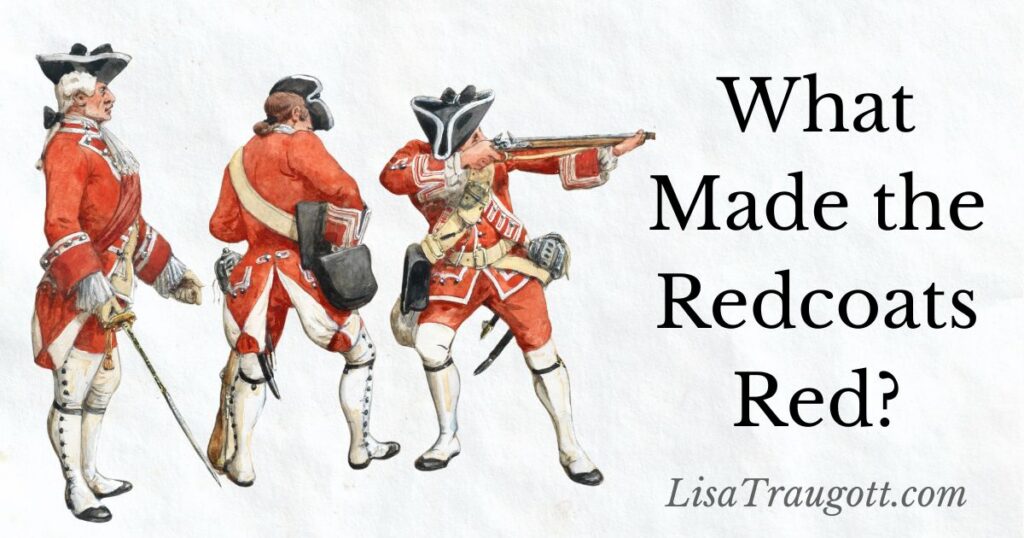
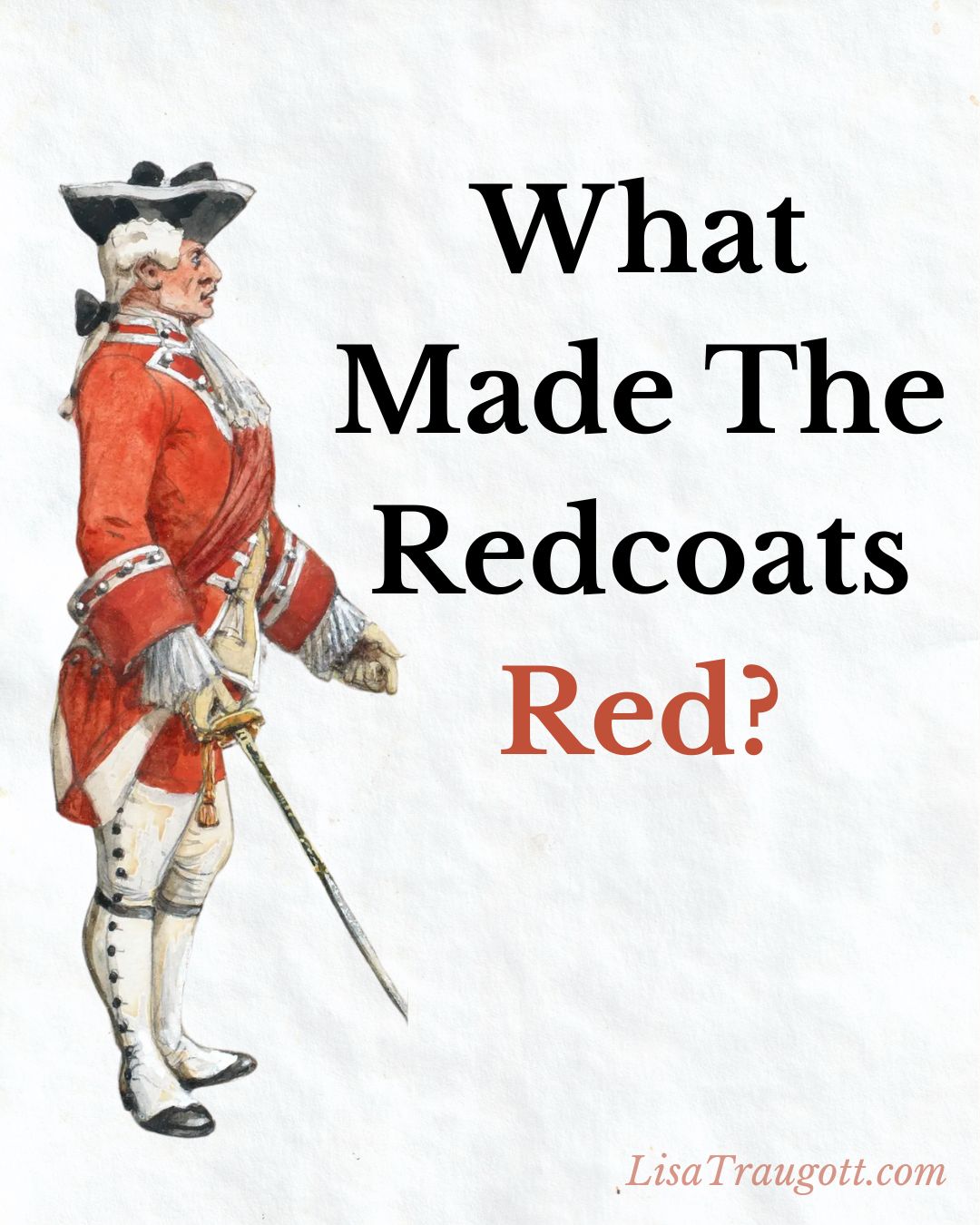
When most people think of colonial America, they picture British soldiers marching in bright red uniforms.
The image is so iconic that we still call them “Redcoats” more than 250 years later.
But have you ever wondered why Britain’s soldiers wore red in the first place?
The answer might surprise you (or gross you out a little).
It involves tiny insects, international trade, and one of the most valuable exports in the world.
Meet the Insect That Changed Fashion
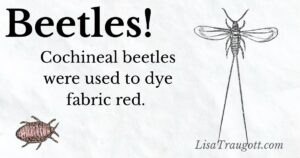
The brilliant scarlet color associated with British military uniforms came from a natural dye called cochineal made from beetles. (Ok, technically, they aren’t beetles, but tiny scale insects that live on prickly pear cactus plants in Mexico and parts of Central and South America, but I write historical fantasy not science magazines.)
The insects were harvested, dried, and crushed to create a vivid crimson pigment unlike anything available in Europe at the time.
The resulting color was rich, vibrant, and remarkably long-lasting.
European nobles quickly fell in love with it.
Soon, the dye became one of the most sought-after luxury products in the world.
Spain’s Secret Treasure

After the Spanish conquest of the Americas, Spain gained control over the cochineal trade.
For centuries, Spanish merchants carefully guarded the source of the dye.
In fact, cochineal became so valuable that it rivaled silver as one of Spain’s most profitable exports.
European nations knew the dye came from the New World, but Spain worked hard to keep the details of its production secret.
Much like a modern corporation protecting a trade secret, Spain wanted to maintain its monopoly for as long as possible.
The strategy worked.
For hundreds of years, cochineal remained one of the most valuable commodities crossing the Atlantic.
Why Did the British Army Choose Red?
The British military had used shades of red in uniforms since the seventeenth century, but cochineal allowed manufacturers to produce the vivid scarlet color that became associated with British officers and elite uniforms.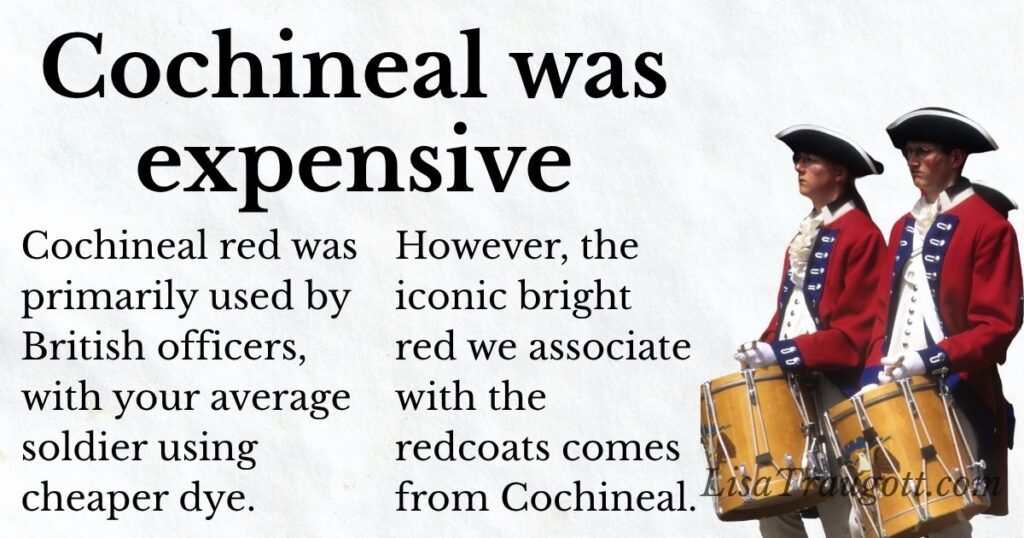
Not every soldier wore the same quality fabric.
Because cochineal was expensive, the brightest and most vibrant scarlet uniforms were often reserved for officers and higher-quality dress uniforms.
Ordinary soldiers frequently wore coats dyed with less expensive materials that produced darker or duller shades of red.
Still, the overall effect was unmistakable.
Whether in Britain, Scotland, or the American colonies, a line of red-coated soldiers was instantly recognizable.
The Redcoats in Colonial America
By the time tensions between Britain and its American colonies escalated in the 1760s and 1770s, red uniforms had become a powerful symbol of British authority.
To American colonists, the sight of Redcoats could inspire confidence, resentment, fear, or loyalty depending on one’s political views.
Today, the bright red uniform remains one of the most recognizable images of the Revolutionary era.
Yet few people realize that the color owed its existence to tiny insects harvested thousands of miles away in the Americas.
History is full of surprising connections like that.
From History to Fiction
One of my favorite things about researching historical fiction is discovering unexpected details hiding beneath the surface of everyday life.
When writing stories set in the eighteenth century, it’s easy to focus on famous events and overlook the small details that shaped the world.
But details matter.
The clothes people wore, the food they ate, the ships they sailed on, and even the dyes used to color their uniforms all helped define life in colonial America.
As part of my America 250 series, I’ll be sharing more fascinating stories from the world that inspired To Condemn a Witch and To Rescue a Witch.
Because sometimes the smallest details reveal the most interesting history.

Did You Know?
The same cochineal dye used to create brilliant red fabrics is still used today in some cosmetics, foods, and beverages as a natural coloring agent.
Not bad for a tiny insect.
Also… eeew!
Further Reading
- Smithsonian Magazine – The Bug That Had The World Seeing Red
- Redcoats & Revolutionaries – His Majesty’s Warrant for the Regulation of the Colours, Clothing, etc. of the Marching Regiments of Foot
- Mount Vernon – George Washington and the Revolutionary War – They also have many exhibits in their museum
- Colonial Williamsburg – Online Games & Resources for Kids and Teachers
Question for Readers:
What piece of colonial history would you like to learn about next—convict ships, witch bottles, Benjamin Franklin and the Hellfire Caves, colonial food, or something else entirely? Let me know in the comments 🙂