Norse Mythology, Yule and Christmas Traditions
Happy holidays! Did you ever wonder where some of our Christmas traditions came from? If you guessed Norse mythology, you’d be correct. (Let’s hear it for my Viking ancestors!)
In many cultures across the ancient globe people celebrated the winter solstice, typically December 21st, which was the shortest day and longest night of the year. But it also marks the time when days begin to lengthen, which is why Germanic people in European held the pagan festival of Yule at this time.
Yule Origins
Yule marked the winter solstice and celebrated the return of sunlight. Depending where you live, winters can be incredibly dark. The UK (especially Scotland) has 16 hours of darkness, Sweden has 18 hours of darkness and parts of Norway can experience 24 hours of darkness (except for a few hours of twilight when it’s not pitch black.) Can you see why the return of sunlight would be celebrated?
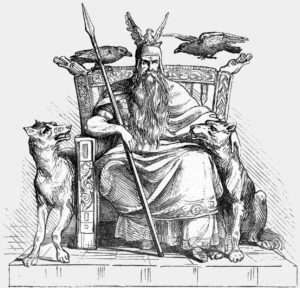
The religious basis is linked to Norse mythology, specifically Odin, who was believed to lead the Wild Hunt. Basically Odin, the All-Father, rode his eight-legged steed, Sleipnir, across the sky to gather the dead. His companions sometimes included the goddess Freyja, as well as the Valkyries, ghostly female warriors who decided which slain warriors were worthy to follow Odin to Valhalla (which is like Scandinavian heaven.) Depending on the version of the story, others on the procession included spectral hounds, the dead, and supernatural creatures like elves, trolls, and faeries. The thunderous sounds of hooves signified the coming of harsh winter snow storms and death. Odin was considered a god of wisdom and transition, so it’s thought that this procession symbolized death and renewal. If you were a local unlucky enough to witness this ghostly procession, it meant calamity was coming, so people were told to stay inside on the solstice. But…if you left some food outside Odin’s posse might leave you blessings and gifts, at least in some versions of the story.
The Santa Connection
Some people say this story might have inspired Santa Claus, specifically flying through the night and deciding if people deserve blessings or punishments (think: naughty or nice list.) They also suggest the eight-legged steed influenced the idea of eight reindeer leading the Santa’s sleigh.
12 Days of Yule: The festivities lasted 12 days, a tradition that may have inspired the “Twelve Days of Christmas.”
Evergreens/Christmas Trees:
- Yule: Evergreen trees, holly, ivy, and mistletoe represented life and fertility during the cold winter months.
- Christmas: The modern Christmas tree, wreaths, and garlands continue this tradition, but now we decorate the tree with ornaments and lights (to tie back to the dark/light theme).
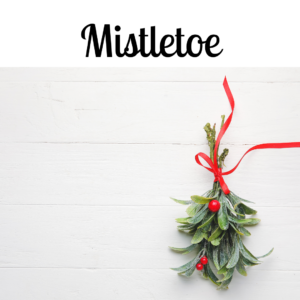
- Yule: Mistletoe was a hardy plant, strong enough to survive a Scandinavian winter. For this reason it was sacred to the Druids, symbolizing protection and fertility. Kissing under the mistletoe may trace back to these fertility rites.
- Christmas: Still a playful, romantic holiday tradition. My family used to hang mistletoe over our front door and my brother and I used to laugh watching our parents give each other a quick kiss when my dad came home from work.
Food, Glorious Food:
Most folks in ancient times were farmers, making seasonal changes tied to planting, reaping and harvesting top of mind. Keep in mind that life was tough for our collective ancestors – no heat to keep people warm, no refrigerators to keep food fresh, no indoor plumbing for water and no medicine beyond herbal remedies from your local wise woman. This is a little morbid, but one of the reasons why people gathered with their families was because winter was notoriously rough, and no one was sure which relatives would survive to see the spring. For this reason, people made a point to share meals, memories and laughter with their family and friends.
- Yule: Feasts, mead, and the communal sharing of food were central, emphasizing abundance and unity. Some typical things people would have eaten included freshly slaughtered animals (pork, mutton), fish like herring or cod, bread made from barley, rye or oats, dried fruits (like dried apples, rowans and currants) and hazelnuts or walnuts. Beer and spiced ale were common Yule drinks, as well as mead made from fermented honey.
- Christmas: Modern holiday dinners with family and friends mirror this spirit of gathering and gratitude. My father’s side of the family is Swedish, and when we went to my grandma’s house for Christmas she would make a smorgasbord (aka – a big feast with lots of the foods mentioned above).
- A modern adaptation to desserts and decor often include orange slices to symbolize the sun. (Yes, we’re back to the dark/light theme again!) It helps we have globalized foods and refrigeration available nowadays.
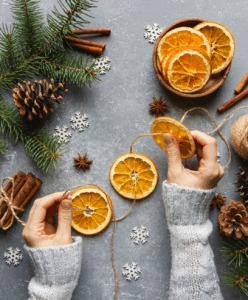
Yule Log:
- Yule: A large log was burned in the hearth to symbolize warmth, protection, and the rebirth of the sun. Ashes were kept for good luck.
- Christmas: The Yule log tradition has evolved into desserts like the Bûche de Noël, and for many, it lives on in symbolic fireplace displays.
Christmas Caroling and Wassailing:
- Yule: Wassailing involved singing door-to-door blessings for a bountiful harvest and goodwill.
- Christmas: Modern caroling echoes this practice, spreading cheer and festive spirit.
Yule Goat (Julbock)
This tradition is not as well known in America, but since my grandparents came from Sweden, we grew up seeing straw goats as Christmas decorations. When I first started dating my husband in California he had no idea what a Julbock was and thought it was kind of quirky until we put the goat on a surf board and took a picture of it catching a wave. Our straw goat has been a beloved holiday tradition ever since. But I digress.
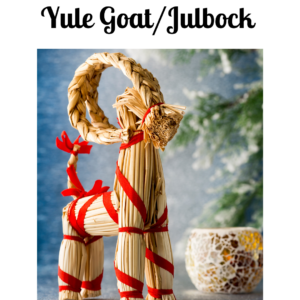
- Yule: The Yule Goat is thought to be linked to Thor, the Norse god of thunder, who rode a chariot pulled by two goats, Tanngrisnir and Tanngnjóstr. These goats could be slaughtered and resurrected, symbolizing renewal and fertility. The Yule Goat might have been made of straw to represent a good havest.
- Christmas: During the Christianization of Scandinavia, the goat persisted as a folk tradition connected with Yule festivities and fertility rites and started appearing in holiday processions. Between the 17th-18th centuries, before Santa Claus, the Yule Goat was said to deliver small presents to families. In my own family, we have a Yule Goat that has lived with my family since I got married. I had to explain the tradition to my non-Scandinavian husband, who was very confused, but thought it was kind of cool. One year, when we were living in San Diego, we put my Yule Goat on a surfboard as a wave came and that became our Christmas card 😉
Transition to Christmas
When Christianity spread to Northern Europe, many Yule traditions were absorbed and adapted into Christmas celebrations to ease the transition for pagan communities seeking Christ. For example, the celebration of the birth of Jesus was aligned with the timing of Yule to emphasize renewal and hope. These ancient Yule traditions highlight humanity’s deep connection to nature, light, and community, themes that remain central to the magic of the holiday season.
Gift Giving:
- Yule: Offerings were made to deities, spirits, and community members as acts of goodwill. An animal might be slaughtered in honor of Odin, Freyja or Thor and then shared among the community during the feasting. Gifts to family probably would have been practical, like scarves, gloves or socks to keep warm or tallow or beeswax candles to light up the room during the long nights.
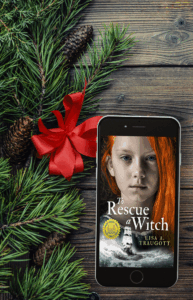
- Christmas: This has transformed into the widespread practice of exchanging presents. While we’re talking about gifts, might I suggest my books for the historical fiction/ fantasy fiction reader in your life?
Fantasy Fiction Lovers
To Condemn a Witch – It’s 1729. A clairvoyant healer must form a coven to protect a girl from a ruthless witch hunter who wants to steal her magic. It’s like Practical Magic but a lot grittier, Scottish and with spicy scenes you should not read at work!