Discovering Brandon Sanderson‘s “Laws of Magic”, blew me away. Law #2 forever changed my writing. Are you ready to hear the rules?
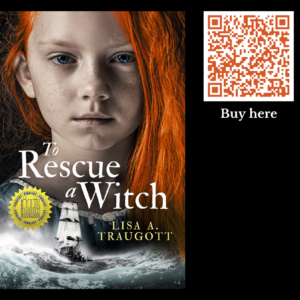
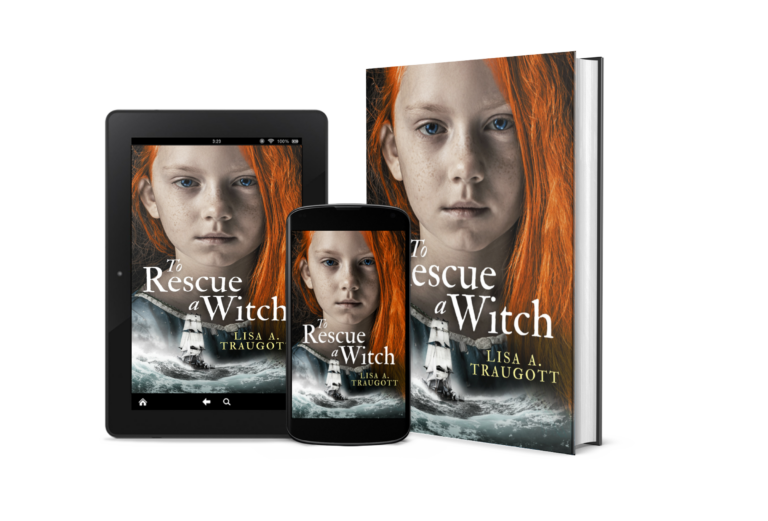
Confession: while my first novel, “To Rescue a Witch“, is a historical fiction with magical elements that could easily be explained away, the prequel “To Condemn a Witch” (coming soon!) is a full on historical fantasy fiction… Ghosts! Witches! Spells! … and I’ve never written anything like that before.
In a mad dash to level up, I’ve been binge watching YouTube videos about magic systems and I stumbled upon a series of master classes given by Brandon Sanderson, a bestselling fantasy author, formulated three widely cited “Laws of Magic” to help writers create compelling and consistent magical systems. Here are his Three Laws of Magic:
“An author’s ability to solve conflict with magic is directly proportional to how well the reader understands said magic.”
How can we help the reader understand how the magic works? He says there are two types of magic systems with different goals.
A hard magic system is well-explained with firm rules that can be followed. Characters can use magic to solve problems in a satisfying way.
Hard Magic
A great example of hard magic is the 1999 movie The Matrix. (I know, I know, it’s science fiction, but let’s look how this first rule of magic applies.
Clear logic – Everyone lives in a simulated world created by code (the matrix). If you understand the code, you will be able to bend or break the rules of this code to do things like dodge bullets or jump over buildings.
Training = power. Neo doesn’t start knowing anything about the real world. He literally has to download programs into his brain to learn how to fly helicopters. (Which, by the way, is super cool and I wish that option was available when I was taking geometry in high school.)
Rules exists. The agents follow the codes. Things only begin to change because Neo and his band of friends literally rewrite the codes.
Stakes and costs. If you die in the matrix, you die for real.
Consistency. Powers only grow when you understand and believe. (This is the famous ‘there is no spoon’ moment.)
Soft Magic
If magic is mysterious and vague, it’s a soft magic system. This type of magic is often used to cause obstacles for characters.
My favorite example of soft magic is Game of Thrones.
Vague rules. Dragons, extinct for hundreds of years, suddenly hatch now that Daenerys has come of age. Why? Who knows? Just go with it.
Mythical and mysterious. We’re told that White Walkers are ancient and we know they are powerful but don’t fully understand why. Their powers are based on divine will and prophesy rather than someone training to become one.
Unclear limitations. How does Melisandre bring people back to life? Why can Bran see the past and future? We never really know the how, only that it happens.
Rarely used. Westeros is mostly governed by power-hungry kings and queens and the world is tangible. Magic is only used in key moments to make things interesting.
Hybrid Magic (both hard and soft systems)
My own novel, “To Condemn a Witch” is a hybrid magic system to give it both structure and a hint of mystery, because that’s way more fun.
Some rules are clear. Certain spells and magical encounters follow logic. Communication between the living and the spirits is confined to the eight Celtic fire festivals, when the veil between the living and the Otherworld grows thin.
Other parts remain mysterious. Ancient, divine and unknowable magic plays a part. The wise women in my story follow Druid traditions and they pray to Beira, Queen of Winter, first Cailleach, Goddess, Destroyer and Protector. Beira, goddess that she is, has a mind of her own and doesn’t bother to explain what she does or why to any character. Prophesies and curses are never fully explained, we just know they work.
Balance of control and wonder. Hybrid systems give protagonists a toolbox (hard magic) while keeping the universe mysterious (soft magic), leaving room for twists, miracles, and myth.
What your magic can’t do is more interesting than what it can.
Weaknesses, costs, or side effects create tension, drama, and meaningful stakes.
Key takeaway:Focus on drawbacks and consequences to deepen the story.
This is the rule that got me through my writers block and helped me have a lot more fun with my characters. In “To Condemn a Witch” Matilda (the witch, now ghost) is magically bound to the maiden Eleanor. At first I had Matilda following Eleanor but she could still go off and do things, living her best witchy-ghost life. Boring! So I added a limitation– Matilda could only move 50 feet away from Eleanor without getting yanked back. Suddenly, things were out of reach, frustrations mounted and my characters had to come up with interesting solutions.
3. Sanderson’s Third Law
“Expand on what you have before you add something new.”
Rather than introducing a dozen new magical elements, explore the depth and implications of existing ones.
This makes your world more immersive and coherent.
Key takeaway:Get more mileage out of fewer magical elements.
Although this is a rule of magic, it can be applied to other elements of story telling too. I’m one of those writers who would love to write a cast of thousands, but guess what? That can get really confusing for readers. When there are too many characters or magic systems, readers don’t know which ones are the important ones to focus on. Sometimes less is more.
There you have it! I hope you found this useful. What’s your favorite type of magic system? I’d love to know in the comments below.
In celebration of Women’s History Month, let’s look at some of the best villains in historical fiction and fantasies. What what makes them so delectably evil and fun to watch? Writing villains can be tricky. The biggest pitfall I’ve run into is making my bad guy two-dimensional, or as my daughter would say, making the…
Writing the first word of your book can feel like embarking on an exciting journey. Not everyone finishes. Personally, it took me two attempts at novels abandoned half-way through before I was able to actually complete a full manuscript. This blog posts offers some tips to finish writing your book. Publishing your book, is a…
How many books can you read in a year? Some reading rock stars include Warren Buffet (5-6 hours reading per day), Bill Gates (50 books per year), Mark Zuckerberg (1 book every two weeks) and Oprah Winfrey (she brought book clubs to the next level). But what if you’re not a billionaire? According to Pew…
Why say something in one word when you can say it in 36 words, right? Wrong. Unless you’re Charles Dickens and getting paid by the word, today’s reader doesn’t have the time/attention span to read tons of exposition or lengthy descriptions of the sunset. Sure, if you’re an established New York Times bestselling author, you…
Everything you wear is a statement about yourself. This was doubly true for people in the 18th century. Clothing defined your gender, class and ethnicity as well as your personal preferences. Fashion in Literature Whether you are writing a novel or telling a story, the clothes a character wears can reveal a lot of information…
Happy book birthday, “To Rescue a Witch”! It’s taken 3 1/2 years to finish my debut novel, but it’s finally for sale in paperback ($11.99) and Kindle ($4.99). Thank you everyone who cheered me on during the long process. I hope you will enjoy reading it as much as I enjoyed writing it. As a…